
Holy week and Easter (
Pascha) offer an amazing experience – the most impressive and special of all the Greek holidays. The traditions have been handed down from generation to generation for nearly 2000 years. I feel very privileged to once again be invited into my Greek family to experience this special time. Each day I’ve tried to observe or participate in part of the experience – special thanks to my Greek “mother” here – Adriana, who has been spoiling me shamelessly with her fabulous cooking, gifts from her farm and lots of hugs and kisses.
I’ll try and give you a synopsis of the week, as I understand it with my western eyes. And yes, chocolate bunnies, easter eggs and chicks are all part of the popular symbolism here too!
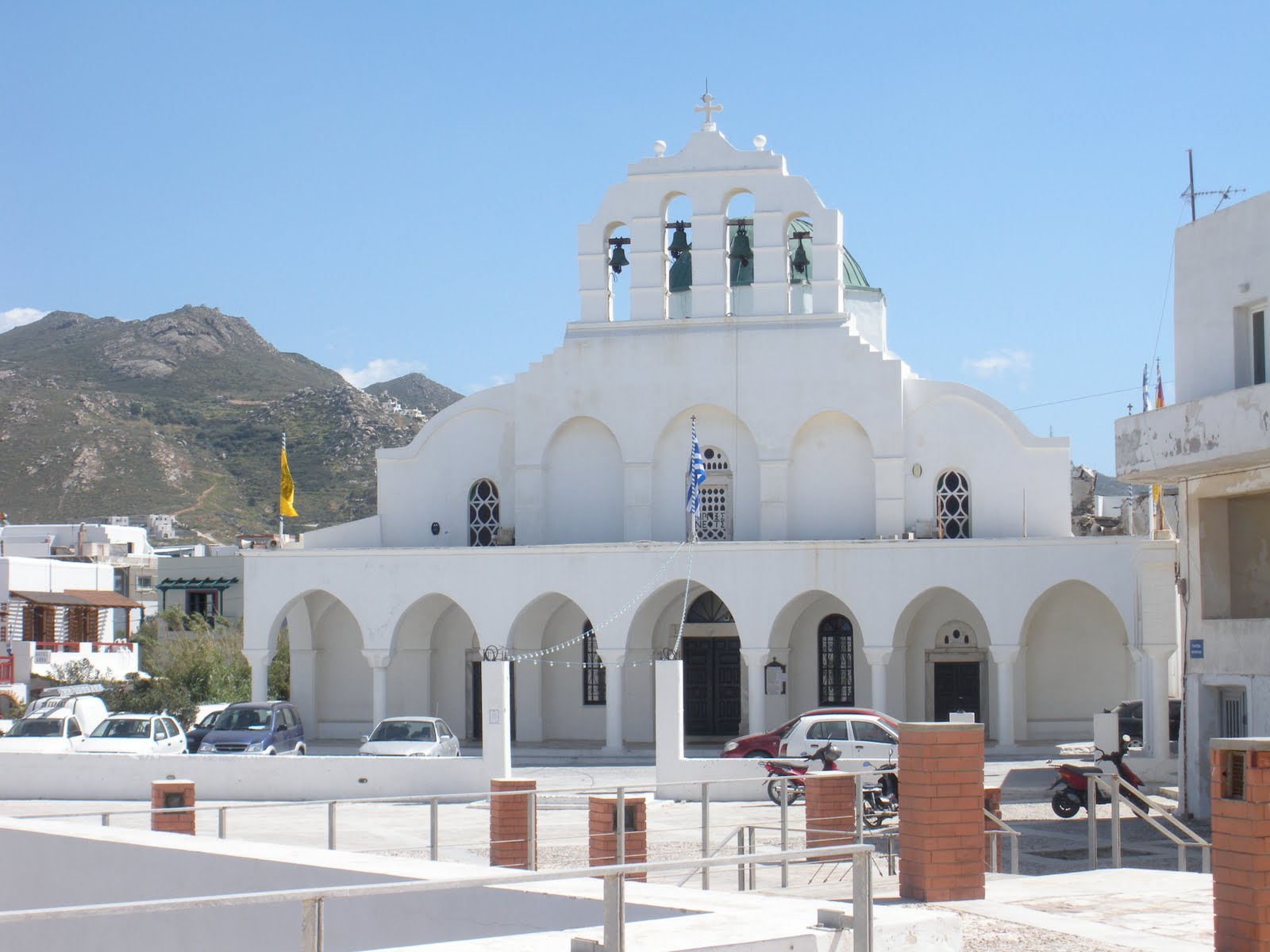
I am writing this on Good Friday, sitting on my sea-view terrace, just a stone’s throw from the large Orthodox cathedral. The bells have started the death knell – one single solemn toll about every 15 minutes that will continue throughout the day.

The islands and small villages are the best place to immerse yourself in this beautiful time of year. The countryside is lush and green and the array of wildflowers is astonishing. Each day now, the ferries arriving in Naxos have been stuffed with citified Naxians returning home from Athens to mama for the holidays. You can feel the mental shift in town – clothes are a little trendier, heels are a little higher and smart leather bags, snazzy cars, big sparkly watches and jewelry are trotted out to dazzle the locals. It’s a festive time – the cafes are full, the streets bustle and the air is filled with triple-cheek euro kisses as people are reunited. The shops are filled with Easter candies, gifts and decorative candles to be used on Easter Eve. The kids have a two week school break, and sport new clothes and toys from indulgent parents, godparents and, uhmmm… me!
Holy Week – or Great Week - begins with Palm Sunday. The churches are decorated with palm, bay and myrtle. Strict fasting rules are relaxed and the menu today may include fish dishes – fish being the secret symbol of the early church.
Monday – this is the final week of fasting and observance of the events leading up to the Passion. Even the not so devout don’t eat meat, eggs and dairy. Even olive oil and wine is not on the menu in some households.

Tuesday – this is Mary Magdalene’s day – and the prostitutes make it a point to attend church. This is also the day that good housewives whitewash their houses, fences, edge their walks and trees.
Holy Wednesday – the service of the holy unction takes place in the afternoon – the anointment of the faithful with oil. The holy oil is also brought home to anoint the family icons using a sprig of oregano.. which is then placed near the icon for emergencies. If a new house is to built – the sprig is placed on the cornerstone of the foundation.
Holy Thursday – lots to be done this day, but it remains a sacred and austere occasion. In the morning the church is decorated in black, purple and white and the priests read the gospel passages referring to the last supper. Then after communion for all – everyone rushes home to start preparing the Easter feast. This is the day the scarlet easter eggs are dyed, holy breads, buns and cookies are baked. The sweet breads are called
tsoureki and the cookies called
koulourakia. Adriana’s are inspired and I shamelessly mooch a platter from her.

More church in the evening – a long service filled with sacred ritual. The women become the guardian of the flower and candle decorated crucifix, joining the holy mother in mourning and singing funeral hymns in an all-night vigil.
Good Friday – church in the morning, everything is closed, flags fly at half staff, and church bells ring a funeral knell all day long. Little food is eaten. Just before noon the symbolic bier called the
epitaphios for the body of Christ is decorated with gold cloth and fresh flowers – the iconic body of Christ is laid on it and the faithful pass by to pay their homage.
Now this is where the holiday becomes the most interesting for me. On Good Friday eve – the
epitaphios is carried out of the church in a funeral procession – often headed by a band playing funeral marches and followed by the local dignitaries and crowds of the faithful – each one carrying a candle. The church bells continue to toll mournfully. In some villages, effigies of Judas are burned – each island and region has its own customs. Here in Naxos, there will be three such processions - two from the major orthodox churches, and one from the Roman Catholic church (a throwback to Venetian times). All will convene in the Mitropolos' plateia in a show of brotherhood - and form the combined parade through town.
Holy Saturday – the gloom starts to lift. More church, with a noisy service to scare away the demons. Now on this day, the grande fromage of the Orthodox church – the Patriarch, breaks the seal of the door of the tomb of Christ in the Church of the Holy Sepulcher in Jeruselem and emerges with the Holy Fire, which is then flown by Olympic Airways, accompanied by high-ranking priests and government officials to Athens. From there the flame is distributed to churches all over Greece. If it is a bad weather day, everyone in the country is on edge until the flame safely arrives.
The rest of Saturday is spent preparing the Easter feast. Lamb or kid is sacrificed and a special soup is prepared from the innards called called
mageiritsa - supposedly very delicious, but I've always given it a pass. The soup with the eggs, bread and cheeses will be consumed immediately following midnight mass. The church is redecorated with fresh flowers and branches of bay, myrtle and rosemary. People dress in their best – children often sport a new red coat or sweater or red shoes.
In the evening people gather in the church yard with their unlit candles. Children are given elaborate specially decorated ones (
lambathes) by their godparents. I love these candles - some are decorated with fancy ribbons and bows, but the ones especially for the kids are decorated with cartoon characters like Power Rangers or Hello Kitty. My favourite is the Pascha Barbie one.
The church service begins around 10 and, while the church is packed with the truly devout, most people hang around outside the church. Just before midnight the lights go out in the church. The priest appears at the door carrying a lighted candle to tell the people that Christ has arisen from the dead. The crowd then lights candles from the priest’s and each in turn lights their neighbour’s candles – and everyone joins in the hymns Christos anesti – “Christ has risen.” People kiss, church bells ring out, the ships in the port blow their sirens, elaborate fireworks are set off (the noisier the better) and everyone parades home to dinner – trying to keep their candle lit in order to bless their homes with a smoky cross over the doorway. Once home, the fast is broken with the
mageiritsa and the feasting and party begins. For the next 24 hours, fireworks, firecrackers, gunshots, even dynamite is fired off to celebrate.

Easter Sunday – the outside spit and fire is prepared to roast the lamb – this is a job handled by the men of course – with much arguing ad friendly bickering about just how to do the charcoal right and when the lamb is cooked to perfection. Hmmm, much like our Sunday steak barbecues, no? So now those gorgeous bright red dyed eggs come into play. Before eating them, the Greeks engage in a ritual from Byzantine times – cracking their egg against each others and saying
Christos anesti (Christ has risen) and
chronia polla (many years). Competition is fierce for the person whose egg cracks all the others without breaking is said to have good luck in the coming year.
The festive atmosphere prevails all day long with lots of wine, ouzo, singing, dancing.. . sometimes lasting for 3 days. In the afternoon there is a special service of
Agapi (love) symbolizing the brotherhood of all nations.
Chronia polla! CHRONIA POLLA!




 I swear to god, this is precisely how I found the island that has now been my spiritual home for over 20 years now. I found a ship that was leaving, settled my ratty hobo bag at my feet, pulled out my ever-present corkscrew and bottle of retsina and only after opening it and taking a long pull, inquired of the ship’s purser where the heck we were headed. “Naxos,” he said. It was a serendipitous discovery.


